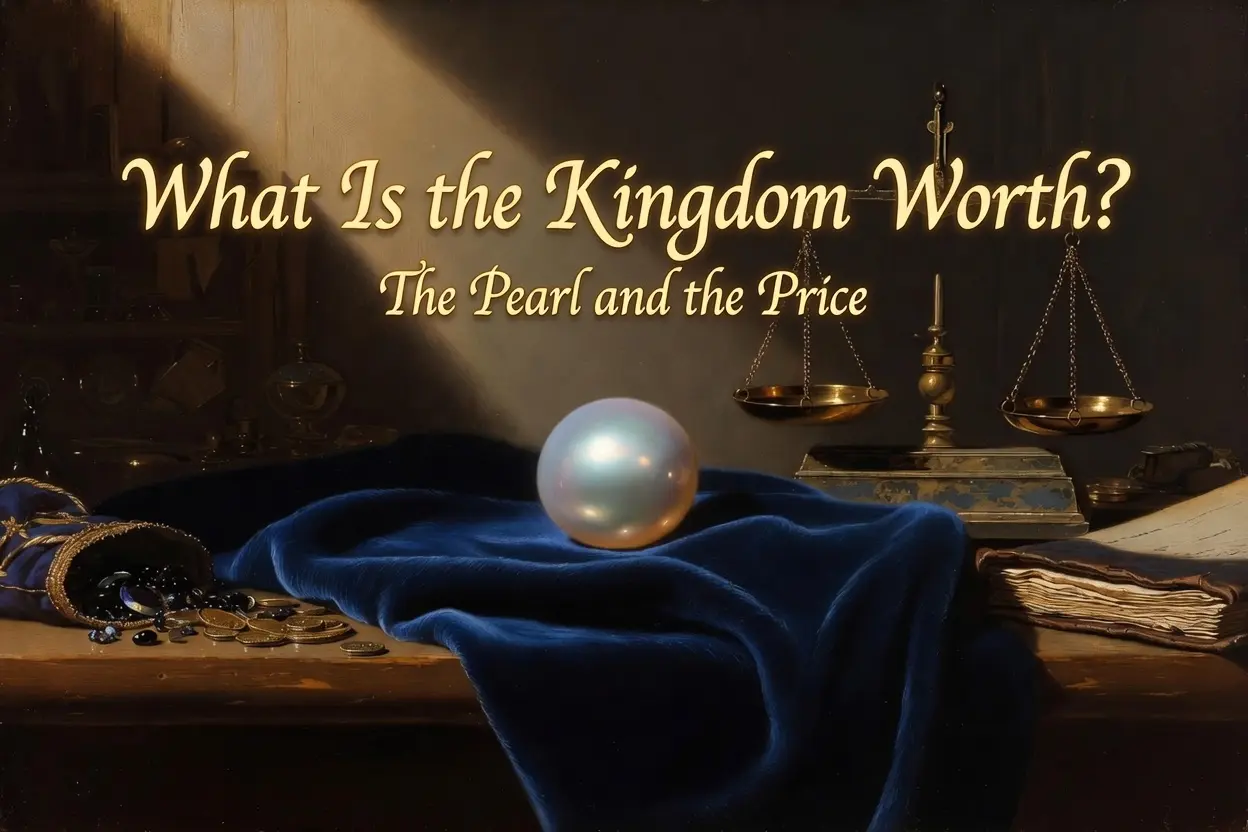
Few of the Lord's parables are quoted more confidently and examined less carefully than the pearl of great price. Sunday after Sunday it is pressed into a gospel invitation: the pearl is salvation, and you must give all you have to buy it. In other pulpits the figure is reversed: Christ is the pearl, and you give up everything to gain Him. In still others — including some who otherwise hold the line between Israel and the church — the pearl is said to be the Body of Christ, purchased by His blood. Three readings, three different pearls, and a small army of decoded merchants, fields, and prices. They cannot all be right, and a parable that means anything the reader pleases means nothing at all.
The remarkable thing is that the Lord told us plainly what this parable is about, in its very first words — and most readers walk straight past the sentence to go hunting for hidden meanings it does not hold. Let us read it slowly:
"Again, the kingdom of heaven is like unto a merchant man, seeking goodly pearls: Who, when he had found one pearl of great price, went and sold all that he had, and bought it." (Matthew 13:45-46 KJV)
Let the Sentence Name Its Own Subject
The kingdom of heaven is like. That is the subject. Not the Body of Christ is like, not salvation is like, but the kingdom of heaven. Again and again through this chapter the likeness opens the same way, and the Lord Himself filed them all under one heading. When the disciples asked why He taught this way, He answered, "Because it is given unto you to know the mysteries of the kingdom of heaven, but to them it is not given." (Matthew 13:11 KJV)
So before we ask who the merchant is, the text has already told us what the whole picture illustrates: the kingdom of heaven. And the one object of supreme value in the scene — the thing sought, found, and bought at the cost of everything — is the one pearl of great price. In the context the Lord set, that pearl is the kingdom of heaven itself, held up before His hearers as the thing of incomparable worth. It is no objection that the likeness opens with the merchant rather than the pearl; in these similitudes the comparison is to the whole scene, and the point of each is carried by its focal image — here, the one incomparable pearl for which everything else is gladly let go.
This guards us against a common mistake in handling parables: the urge to assign a hidden meaning to every figure in the story. A parable is not a cipher in which each noun stands for a secret referent; it is an earthly picture told to drive home one point. The merchant man here need not be anyone in particular. He is an illustration — a man who knows real value when he sees it, and who, having found the one supreme treasure, gladly lets everything else go to possess it. To press him into a code for Christ, and the price into His blood, and the pearl into the church, is to make the parable carry a freight the Lord never loaded onto it. The sentence names its subject, and its subject is the kingdom and its worth.
These Are Mysteries of the Kingdom
It is worth dwelling on that heading, the mysteries of the kingdom of heaven, because it fixes both the audience and the subject. The kingdom of heaven is the covenanted, earthly kingdom promised to the fathers and preached by John, by the Lord, and by the twelve — the kingdom the disciples still expected when they asked, after the resurrection, whether He would at that time restore it again to Israel. These parables were spoken to that generation, about that hope. The sower, the tares, the mustard seed, the leaven, the hid treasure, the pearl, the dragnet: seven likenesses, all of one subject, all addressed to Israel concerning the kingdom that was being offered to her.
All of this raises the disciples' own question: why teach the kingdom this way at all, in stories that veil as much as they show? The Lord answered on the spot — and He answered out of the prophets, who had foretold both how the King would speak and why.
Why the King Spoke in Parables
First, the method was prophesied. Matthew tells us the Lord taught in parables "That it might be fulfilled which was spoken by the prophet, saying, I will open my mouth in parables; I will utter things which have been kept secret from the foundation of the world." (Matthew 13:35 KJV) He is quoting Asaph: "I will open my mouth in a parable: I will utter dark sayings of old" (Psalm 78:2 KJV). The veiled, dark-saying form was no improvisation; it was the prophesied manner in which kingdom truth would be brought out.
And Asaph, in the same psalm, tells us why such dark sayings are uttered and preserved. They are not to be buried but handed down — past one generation, into the keeping of the next: "We will not hide them from their children, shewing to the generation to come the praises of the LORD ... That they might set their hope in God, and not forget the works of God, but keep his commandments: And might not be as their fathers, a stubborn and rebellious generation." (Psalm 78:4,7-8 KJV) There is the pattern of the dark saying in Israel: it carries the truth past a rebellious generation and lodges it with the children, that they might set their hope in God. The dark saying that shuts out the scoffer keeps the treasure safe for the heir.
Lay that over Matthew 13 and the fit is exact. There stands the rebellious generation — "this people's heart is waxed gross" (Matthew 13:15 KJV); and there stand the children, their hope set right — "But blessed are your eyes, for they see" (Matthew 13:16 KJV). The same parable does both works at once, which is the second thing the Lord explains from the prophets: the parable's two-edged effect is judicial, and Isaiah had said so. When the disciples ask why He speaks in parables, He answers with a "therefore" and Isaiah's own commission: "Therefore speak I to them in parables: because they seeing see not ... And in them is fulfilled the prophecy of Esaias, which saith, By hearing ye shall hear, and shall not understand" (Matthew 13:13-14 KJV), straight from "Hear ye indeed, but understand not ... lest they ... understand with their heart, and convert, and be healed." (Isaiah 6:9-10 KJV) The parable hides the kingdom from the nation that has closed its own eyes, and unveils it to the remnant who will receive it. Mercy and judgment in a single sentence — and both were written beforehand in the prophets.
So what was actually kept secret was never the kingdom itself. That had been proclaimed from Daniel to Malachi — "in the days of these kings shall the God of heaven set up a kingdom, which shall never be destroyed" (Daniel 2:44 KJV). What was held back was the manner of the kingdom's coming — that it would not arrive at once in open power, but be sown by a rejected King, spring up small, and endure a mingling of true and false until the harvest at the end of the world, as these very parables disclose. That interval the prophets searched after but were not shown: "the prophets have inquired and searched diligently, who prophesied of the grace that should come unto you: Searching what, or what manner of time the Spirit of Christ which was in them did signify, when it testified beforehand the sufferings of Christ, and the glory that should follow." (1 Peter 1:10-11 KJV) They were given the sufferings and the glory; they were not given the gap between. The Lord seals it: "many prophets and righteous men have desired to see those things which ye see, and have not seen them." (Matthew 13:17 KJV) The kingdom's secrets were a curtained room within the prophets' own house, longed for and searched after. Remember that; it is the hinge of the whole question.
The Point Is the Worth of the Kingdom
To feel the parable's force we must hear it where it falls in the Lord's ministry. He had come preaching one message: "Repent: for the kingdom of heaven is at hand." (Matthew 4:17 KJV) The same word He put in the mouths of the twelve — "as ye go, preach, saying, The kingdom of heaven is at hand." (Matthew 10:7 KJV) The kingdom was being offered to that generation; it stood at the door. But an offer at hand is not the same as a kingdom obtained. They would not enter it unless they valued it rightly, and entrance would cost them everything. So the King, having proclaimed the kingdom near, now sets about teaching them what it is worth — that they may be willing, when the moment comes, to pay the price of getting in.
That is the work this parable does. Here is a man who deals in fine pearls all his life, who finally lays eyes on the one beyond all others — and he counts it cheap at the price of everything else he owns. That is what the kingdom of heaven is worth, the Lord is saying. Is it worth that to you?
The twin parable just before it makes the same point with a different picture: "Again, the kingdom of heaven is like unto treasure hid in a field; the which when a man hath found, he hideth, and for joy thereof goeth and selleth all that he hath, and buyeth that field." (Matthew 13:44 KJV) Again the subject is named — the kingdom of heaven — and again a man, having found a treasure of supreme worth, for joy sells all that he has to secure it. The matched pair teaches one lesson twice: the kingdom is worth everything; the man who truly sees its value will let all else go for it, and count the bargain a joy.
This was no abstraction to Israel, and the price was no figure of speech. The kingdom the Lord offered came with terms, and those terms were total. He told the rich young man, "go and sell that thou hast, and give to the poor, and thou shalt have treasure in heaven: and come and follow me." (Matthew 19:21 KJV) He said, "whosoever he be of you that forsaketh not all that he hath, he cannot be my disciple." (Luke 14:33 KJV) He commanded, "seek ye first the kingdom of God, and his righteousness." (Matthew 6:33 KJV) The believing remnant in early Acts did exactly that — they sold their possessions and had all things common.
And the price did not stop at goods. The Lord was steadily leading His hearers toward the costliest demand of all — the cross laid on their own shoulders. "If any man will come after me, let him deny himself, and take up his cross, and follow me. For whosoever will save his life shall lose it: and whosoever will lose his life for my sake shall find it." (Matthew 16:24-25 KJV) "And whosoever doth not bear his cross, and come after me, cannot be my disciple." (Luke 14:27 KJV) This is where the pearl was teaching them to go. First learn what the kingdom is worth; then you will not flinch when told the price is your own life. The merchant who sells all to gain the one pearl is the very picture of the disciple the King was making — one who has weighed the kingdom against all he has, and lets it all go for joy. The parable is the schooling; the cross is the bill it prepares them to pay.
The Lord even set the parable's living opposite before us, in this same Gospel. A rich young man came asking "what good thing shall I do, that I may have eternal life?" (Matthew 19:16 KJV), and was shown the price — "sell that thou hast, and give to the poor ... and come and follow me" (Matthew 19:21 KJV) — and "went away sorrowful: for he had great possessions." (Matthew 19:22 KJV) There is the merchant run backwards: a man who saw the pearl, heard its cost, and would not pay, because he prized his goods above the kingdom. "A rich man shall hardly enter into the kingdom of heaven," the Lord said (Matthew 19:23 KJV); and Peter gave the other side for the disciples — "we have forsaken all, and followed thee" (Matthew 19:27 KJV) — for which the promise was a place in the kingdom itself: "ye also shall sit upon twelve thrones, judging the twelve tribes of Israel." (Matthew 19:28 KJV) And the surrender ran to the last extremity, past goods and kin and life to a man's own body: "if thy hand or thy foot offend thee, cut them off ... it is better for thee to enter into life halt or maimed" (Matthew 18:8 KJV). Possessions, family, life, an eye, a hand — nothing was too dear to let go for a kingdom worth everything. Only the rebellious leaders would neither pay the price themselves nor suffer others to: "ye shut up the kingdom of heaven against men: for ye neither go in yourselves, neither suffer ye them that are entering to go in." (Matthew 23:13 KJV) They were the very company to whom it was not given to know.
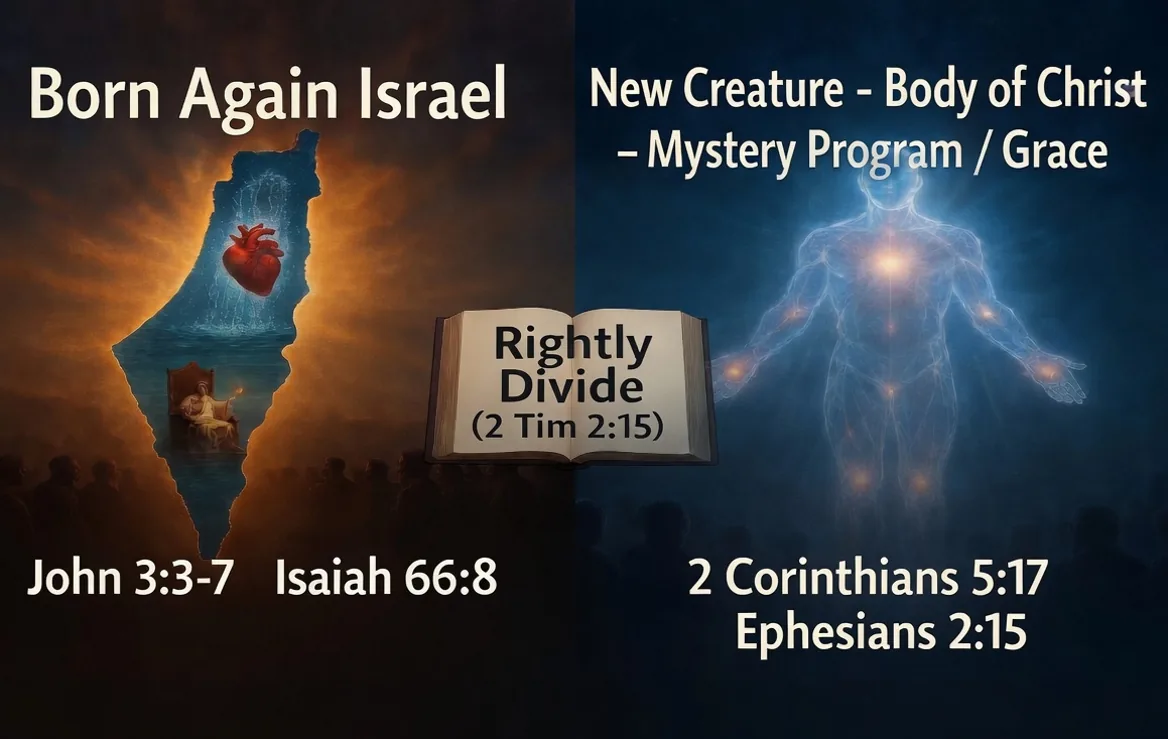
We should mark the boundary carefully, lest we drag this into our own dispensation. This forsaking-all is kingdom instruction, addressed to Israel under the terms of the kingdom program. It is not the doctrine of the Body of Christ, who are "saved through faith; and that not of yourselves: it is the gift of God: Not of works, lest any man should boast." (Ephesians 2:8-9 KJV) Entrance to that kingdom was conditioned throughout — on a righteousness exceeding the scribes and Pharisees (Matthew 5:20), on doing the Father's will (Matthew 7:21), on conversion and the new birth (Matthew 18:3; John 3:5). Even the eternal life the young ruler asked how to do something to obtain is inheritance-life in the kingdom, held out to those who endure — not the present justification the Body receives freely by faith. The price the pearl names is the cost of Israel's kingdom-entrance; it is no tariff laid upon grace. The pearl parable presses the worth of the kingdom upon a people called to prize it above all; it is not a sermon on how a sinner today is justified by grace.
What the Pearl Is Not
Here we meet the reading that most needs answering, because it is held by able men who do divide the word in other places. Peter Ruckman, for one, taught it plainly in his commentary on Matthew: the merchant is Christ, the great price is His blood, and the pearl is the church which is His body. He reasoned from the nature of a pearl — the only jewel that is a living organism, ruined by any division, formed in a hidden place by a secretion that covers an injury, and worn at last by kings — and applied each feature to the body of Christ.
The instinct to honor Christ and His blood is reverent, and parts of the picture are true of the Body in other passages. But as the meaning of this parable the reading cannot stand — it fails at the root, and fails again each way we test it.
First, it ignores the sentence's own subject. The Lord did not say the body of Christ is like; He said the kingdom of heaven is like. To make the pearl the Body is to answer a question the text never asked, and to overwrite the subject the text plainly states. It is the over-allegorizing habit at its most ambitious — decoding merchant, price, and pearl into a secret scheme — and the more elaborate the decoding, the further it travels from the one point the Lord was making about the kingdom's worth.
Second — and this is decisive — the reading collapses on a fact Ruckman wrote down on the very same page. He admitted, of the truth of the church, that "no one in the audience would understand until the revelation is given by Paul in Eph 3." That single sentence overturns his interpretation. A parable is a thing spoken — uttered aloud to a listening crowd to carry a meaning past a rebellious generation into the keeping of the children, as Asaph said. But the Body of Christ was no curtained room within the prophets' house, waiting its turn to be unveiled to Israel; it was a thing hid in God, sealed in His own mind, and not made known until He revealed it through Paul:
"And to make all men see what is the fellowship of the mystery, which from the beginning of the world hath been hid in God, who created all things by Jesus Christ" (Ephesians 3:9 KJV)
"Even the mystery which hath been hid from ages and from generations, but now is made manifest to his saints" (Colossians 1:26 KJV)
Set the two secrets side by side, for the difference is not the bare fact of secrecy — Scripture can call each one kept secret. The difference is where each was hidden, and whether anyone could search it out. The kingdom's secrets lay within the prophetic stream: the prophets foretold the very method of these parables (Psalm 78) and their judicial purpose (Isaiah 6), and they searched diligently after the kingdom's unveiling, desiring to see what the remnant now saw (1 Peter 1:10-11; Matthew 13:17). Veiled though it was, it was theirs in seed, and of old. The mystery of the Body lay nowhere a prophet could reach it — hid in God, spoken by none, desired by none, for nothing of it had been given to desire. This is the larger division the apostle's gospel turns upon: the things God hath spoken by the mouth of all his holy prophets since the world began (Acts 3:21), and the mystery He kept secret since the world began and made known first through Paul (Romans 16:25). The kingdom parables stand on the one side of that line; the Body of Christ on the other. So the Lord could not have been picturing the Body to a crowd in Galilee, for He was at that very moment keeping it secret — not in a parable, but in Himself. To find the Body in the pearl is to make Christ reveal in Matthew what He was still hiding in Ephesians. The two cannot both be true.
There is a sharper edge still to Ruckman's own words, for they collide head-on with the Lord's. Ruckman grants that no one in the audience would understand the church until Paul. But the Lord said the very opposite about these parables, in this very chapter: "it is given unto you to know the mysteries of the kingdom of heaven, but to them it is not given." (Matthew 13:11 KJV) Two companies stood before Him — the believing disciples, to whom it was given to know, and the rebellious nation with its leaders, to whom it was not. The disciples were not the ones left in the dark; they were the very ones granted to understand. And understand they did, by their own testimony, when He had finished: "Have ye understood all these things? They say unto him, Yea, Lord." (Matthew 13:51 KJV) Now hold Ruckman's claim against the Lord's. If the pearl is the Body, then the thing the disciples were given to know — and said plainly they did know — was a thing Ruckman himself admits no one could know until Paul. He cannot have it both ways. The contradiction dissolves the instant the programs are divided: the mysteries of the kingdom were given to the disciples to know, for they belonged to the very kingdom those disciples awaited; the mystery of the Body was given to none of them, for it was still hid in God. The disciples understood the pearl precisely because the pearl is a mystery of the kingdom — and not the Body, which they could not, on Ruckman's own admission, have understood at all.
Follow the reasoning one step further and it comes apart entirely in the hand. For the reading does not merely ask us to believe the disciples missed the point; it asks us to believe the true meaning waited on a whole chain of disclosures the text never promises. First, we are told, the hearers could not know the pearl was the Body until the mystery was revealed to Paul. But when the mystery was revealed to Paul, Paul said no such thing — nowhere in all his epistles does he open this parable, or call any pearl the Body of Christ. The interpretation cannot rest even there. It must wait later still — for expositors who arrive long afterward and see in the parable what neither was given to the disciples nor was ever written by Paul. That is not a mystery revealed; it is a meaning inserted. It demands a second secret laid over the first — a hidden key to the hidden meaning — furnished at last not by Christ, and not by Paul, but by the interpreter's own eye. Against precisely this the Scripture sets its face: "Add thou not unto his words, lest he reprove thee, and thou be found a liar." (Proverbs 30:6 KJV) The plain sense asked for none of it. It lay open from the first hour: the Lord spoke a mystery of the kingdom, gave His disciples to know it, and they understood.
Reading for Yourself, and Why It Matters
A reader might ask: if the pearl is the kingdom, does the Body of Christ lose something by being left out of the parable? Not at all. The Body's hope was never a thing to be drawn out of Israel's kingdom prophecies, because it was never in them — it was hid in God until grace revealed it through Paul. We are not pictured as a pearl bought through a transaction in a kingdom parable, and we have no need to be. We are a people accepted in the Beloved, complete in Him, blessed with all spiritual blessings in heavenly places, by sheer grace. To force the Body into Israel's parable is not to honor the Body but to rob it of its own and better hope, and to blur the very line that makes the grace we stand in legible.
This is the discipline the parable teaches the careful reader. Take the subject the sentence names — the kingdom of heaven is like — and do not overwrite it. Resist the urge to decode every figure; ask first what one point the picture drives home. Read the twin parables together and hear the single lesson they teach twice: the kingdom is worth everything. And let the silence speak — the Body is absent from the parable because, when the words were spoken, it was absent from revelation altogether, kept for that hour in the secret of God. Read this way, the pearl is exactly what the Lord said it illustrated: the surpassing, everything-is-cheap-beside-it worth of the kingdom He was holding out to Israel, and pressing them to prize above all they had.
© 2026 Edward R. Cross




Comments
No comments yet. Be the first to share your thoughts.
Leave a comment